Leaping Fish: Physics 3D Puzzle
StudioDwarf Wanderer Games
Published2026-10-01
Updated2026-10-01
Review
Leaping Fish: Physics 3D Puzzle succeeds by keeping its scope tight. One control scheme, one core mechanic, and a steady difficulty curve make it easy to understand but hard to master. The physics-based movement adds a layer of unpredictability that keeps each jump from feeling scripted. Its WebGL build runs on most modern browsers, and the family-friendly rating opens it to a wide audience. The main limitation is variety: the game leans heavily on its single jump mechanic, so players seeking complex puzzles or story may find it repetitive. Best for casual players who enjoy precision challenges and short sessions.
About
Jumping With Real Physics
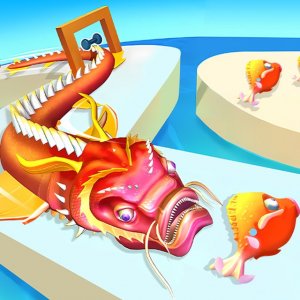
Leaping Fish: Physics 3D Puzzle turns a simple premise into a timing challenge: you control a fish that must leap from one surface to the next. Each jump is governed by physics, so the arc feels natural but slightly unpredictable. You press and hold the mouse button (or tap and hold on touchscreens), then drag opposite the intended direction. An on-screen arrow shows angle and power, changing color when the jump is ready. Release to launch. The fish lands on platforms, stone slides, or floating ice pieces. Miss and you fall into the water, ending the attempt. The goal is to reach the highlighted checkpoint at the end of each level. Because movement is physics-based, no two jumps feel exactly the same, and you must account for momentum and trajectory rather than memorizing a fixed pattern.Reading the Environment
Levels are built from distinct surfaces that affect how you plan a jump. Stone slides may carry you forward with speed, while floating ice pieces can shift your landing angle. Platforms are spaced to require careful timing; some gaps demand a short tap, others a longer hold. The 3D perspective means you must judge distance and depth, not just left-to-right spacing. Before leaping, scan the layout: where is the next safe surface? How much force will it take? The arrow indicator helps, but it does not guarantee a perfect landing. You learn to read the environment and adjust on the fly.Controls and Accessibility
The control scheme is deliberately minimal: one button or one finger. On desktop, hold the left mouse button and drag. On mobile, press and hold the screen, then drag. The drag direction is opposite to the jump, which feels like pulling back a slingshot. The arrow grows and changes color as you build power. Release to jump. This single-mechanic design makes the game easy to pick up, but mastery comes from repeated attempts. The game runs in WebGL on modern browsers without downloads, and full-screen mode is supported. It is rated for ages 3 and up, so families can play together.Difficulty and Progression
Difficulty rises gradually. Early levels offer wide platforms and forgiving gaps. Later stages introduce narrower surfaces, longer distances, and more complex arrangements of slides and ice. Because physics adds variability, even familiar jumps can go wrong if you rush. The checkpoint system means you only need to reach the end of each level to advance, not collect every item. This keeps the focus on precision rather than completionism. Players who enjoy physics puzzles, casual platformers, or games that reward patience will find a steady challenge here.Compatibility
▸ Desktop: Chrome / Edge / Firefox / Safari
▸ Mobile: iOS Safari / Android Chrome
▸ Tablet: iPadOS Safari / Android Tablet Browser
Keep your browser updated for the best experience
FAQ
Can I play Leaping Fish: Physics 3D Puzzle on my phone?
Yes. The game runs in WebGL on modern mobile browsers. Controls are touch-based: tap and hold the screen, then drag in the opposite direction of your intended jump. An on-screen arrow shows power and angle. Release to leap. The same physics and level design apply across desktop and mobile.
Is there a way to practice specific jumps in Leaping Fish?
The game does not include a separate practice mode. However, falling into the water simply restarts the current attempt, so you can retry a jump as many times as needed. This trial-and-error approach is the intended way to learn each level's timing and physics.
What happens if I fall into the water?
Falling into the water ends your current attempt. You do not lose progress or lives; you simply restart from the beginning of the level or from the last checkpoint. This forgiving system encourages experimentation and reduces frustration, especially on later levels with tighter jumps.
Does Leaping Fish have multiplayer or online leaderboards?
The game is a single-player experience. There is no multiplayer mode, online leaderboard, or social feature mentioned in the official description. It is designed for solo play, focusing on individual skill and timing rather than competition against others.
How many levels are in Leaping Fish: Physics 3D Puzzle?
The exact number of levels is not specified in the available information. The game features a series of levels with gradually increasing difficulty, but no official count has been provided. You progress by reaching the highlighted checkpoint at the end of each level.
Is Leaping Fish suitable for young children?
Yes, the game is rated for ages 3 and up. It has no violent content, no text chat, and no in-app purchases mentioned. The simple one-button controls and colorful 3D visuals make it accessible to young players, though later levels may require adult help with timing.
Comments
Sign in to leave a note
You must be logged in before posting a review or rating.
No comments yet. Be the first to comment!






Editorial Notes